Current Series
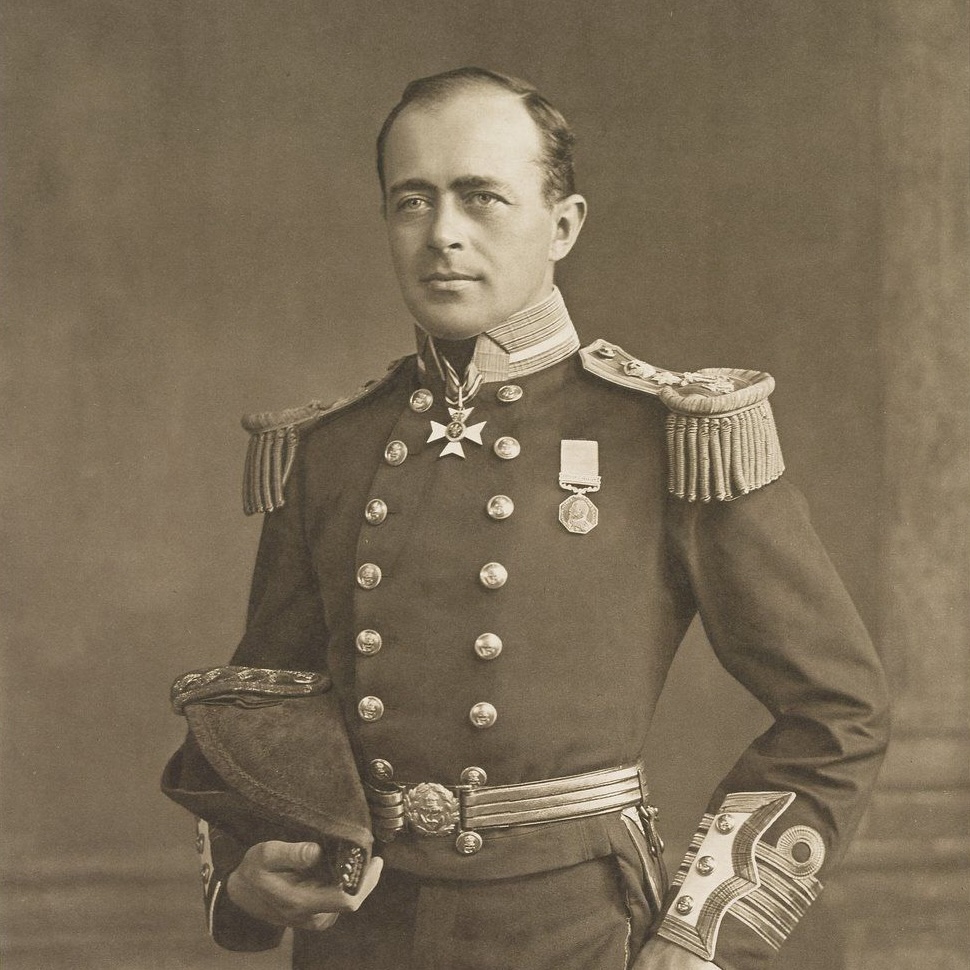
Robert Falcon Scott is one of the pivotal figures of the Heroic Age of Antarctic Exploration. He will lead the Discovery expedition from 1901–04, and the Terra Nova expedition from 1910–13. He will emerge as one of the most celebrated men of the era, and his attempts to reach the South Pole – along with his rivalry with Ernest Shackleton and Roald Amundsen – will enthrall the public.

Check out my new podcast – History Dispatches. It is a daily history show hosted by me and my son. We cover people, places, events and even objects from throughout history – anything we find of interest.
Most recent series
- The Polynesians
- Nero’s Nile Expedition
- The Vivaldi Brothers and the first attempt to sail from Europe to India via the Cape Route
- The HMS Investigator and the Northwest Passage
- Jim Bridger
- Francisco Pizarro and the Conquest of the Inca Empire
Our Explorers
Below is a listing of the explorers we have covered on this podcast. Each explorer is unique – so there may just be a single episode dedicated to that person – or many.
Samurai William Adams
In 1598, a fleet of five ships from the Dutch East India Company sailed to South America with the intention of plundering Spanish treasure ships on the western coast of the New World – before heading across the Pacific to Asia. One of those ships reached Japan nearly two years later, led by an English Pilot named William Adams. It is the unlikely start of a journey that will see Adams become the first European to be granted the status of Samurai. Adams’ story has been popularized with the novel Shogun and two television series of the same name.
Roald Amundsen
10-part series on probably the world’s greatest polar explorer – and one of the most accomplished explorers in all of history. In his life, Amundsen would be the first person to reach the South Pole, the first person to sail the Northwest Passage, the first person to sail the Northwest and Northeast Passages, and the first person to reach the North Pole by Air.
Apollo 11 – The Moon Landing
In July of 1969, three astronauts on board Apollo 11 rocketed into space. The result would be one of the greatest achievements in exploration in history – the landing – and walking – on the moon.
Vladimir Atlasov and the Exploration of Kamchatka
Vladimir Atlasov is known for his exploration and conquest of the Kamchatka Peninsula in the late 1690s.
Vasco Núñez de Balboa
Spanish conquistador Vasco Núñez de Balboa is most famous for being the first European to see the Pacific Ocean in 1513.
James Beckwourth – Mountain Man
James P. Beckwourth would be born a slave, but go on to become one of the most colorful men and explorers of the American west in the 1800s.
Belgica Expedition
In 1897, Belgian naval officer Adrien de Gerlache organized the first major expedition to Antarctica in half a century. It will kick off the Heroic Age of Antarctic Exploration. The expedition will be the first to winter in the deadly Antarctic environment, and include two men critical to the exploration of the polar regions – Roald Amundsen and Dr. Frederick Cook.
Hiram Bingham and Machu Picchu
In 1911, American professor and explorer Hiram Bingham III stumbled upon the ruins of an abandoned city high in the Andes Mountains of Peru. The city was Machu Picchu is today recognized as one of the Seven New Wonders of the World.
Nellie Bly and the Race Around the World
In 1889, New York journalist Nellie Bly began a journey to civrcumnativage the globe. Her goal was to best Phileas Fogg – the hero of Jules Verne’s “Around the World in 80 Days.” Little did she know that a rival publication would send their own reporter on a similar journey – only heading in the opposite direction – setting up a dramatic race that would capture the attention of the world.
Daniel Boone
Daniel Boone was one of the first great figures of American folklore. He was an intrepid hunter, tracker, soldier, surveyor, and very much more. There are stories of Boone – barely a teen – killing an attacking panther with a single shot. And Boone killing 100 bears in one year. And tracking down his daughter after she was kidnapped by native Indians. He blazed a trail through the mountains, and led the first colonists into modern-day Kentucky. He explored the frontiers of North Carolina, Florida, Kentucky and Missouri. The only question is – what was really true?
Brendan the Navigator
We look at the life – a legendary voyage – of Irish monk Saint Brendan of Clonfert (aka Brendan the Navigator, Brendan the Voyager, and Brendan the Bold). Could Brendan have reached North America a thousand years before Columbus? And 500 years before the Vikings?
Jim Bridger
Jim Bridger was the quintessential America Mountain Man. He began as a trapper in the early 1820s, and would become one of the most celebrated frontiersmen in the United States. He is often credited as the first white man to reach the Great Salt Lake, and amongst the first to explore the Yellowstone region. He also would be one of the nation’s finest guides and scouts.
Étienne Brûlé – the original Coureur de bois
Étienne Brûlé was a Frenchman who would become the most famous of the Coureur de bois – or “Runner of woods.” The Coureur de bois were woodsmen who were critical to the early exploration of Canada and parts of the United States.
Burke and Wills Expedition
In 1860, Robert O’Hara Burke would lead an expedition into the Australian outback in an attempt to be the first to cross the continent. The resulting endeavor would become one of the great stories of exploration (and not always for the right reasons).
Richard Francis Burton
Richard Francis Burton was an explorer, writer, scholar, soldier, diplomat, ethnologist, linguist, poet, fencer, and perhaps a spy. He spoke 29 languages – many fluently. He was one of the first Europeans to visit the holy city of Mecca. He explored extensively in Africa, including the Great Lakes District, and is acknowledged as the first westerner to reach Lake Tanganyika – the second largest freshwater lake in the world.
Álvar Núñez Cabeza de Vaca
In 1528, Álvar Núñez Cabeza de Vaca would wash up on the shores of modern-day Texas – a survivor of the ill-fated Narváez expedition. His story is really not one of exploration – but of survival – as he would spend eight years living and traveling the southwest of the United States and northern Mexico.
John Cabot and the Exploration of North America
John Cabot, who was born in Italy, would become the first European since the Vikings to reach the North American continent.
Juan Rodríguez Cabrillo and the Exploration of California
Spanish conquistador and explorer Juan Rodríguez Cabrillo would be the first non-native to reach the western coast of the United States.
Estêvão Cacella and João Cabral and the First Explorations of the Himalayas including Bhutan, Nepal and Tibet
In 1626, Father Estêvão Cacella and his assistant, Father João Cabral, set out from the region of Bengal and into the Himalayan mountains. The two Jesuit missionaries would become the first Europeans to reach the kingdoms of Bhutan, Nepal and parts of Tibet. In the process, they would provide the world with the oldest and most detailed look at Bhutan’s legends – Ngawang Namgyal – and his kingdom.
Alvise Cadamosto in the Age of Henry
In the 1450s, Venetian explorer Alvise Cadamosto would conduct two voyages of exploration for Prince Henry the Navigator. These voyages are a representation of the many expeditions dispatched by Henry in his lifetime.
René Caillié and the Quest for Timbuktu
In 1827, French explorer René Caillié set out to become the first European to reach the fabled city of Timbuktu – and return alive. It’s an extraordinary tale, as Caillié will conduct his expedition without any help. He will immerse himself in the culture and religion of the local people in order to strike out on his own – and win the 9,000 franc prize to the first European to reach Timbuktu – and return to tell about it.
Diogo Cão and the Exploration of West Africa
Portuguese explorer Diogo Cão was an important figure in the early years of the Age of Discovery. His efforts would help Portugal become the greatest naval power in the western world at the time.
Jacques Cartier and the Exploration of the St. Lawrence Region
Jacques Cartier is famed for being the first European to discover the Gulf of St. Lawrence and the St. Lawrence River. This would be the building blocks for French colonization of the New World.
Christopher Columbus
In 1492, Genoese mariner Christopher Columbus – sailing for Spain – became the first European to reach the Americas since the Vikings 500 years earlier. It is one of the most significant events in world history. He is, arguably, the most famous explorer in history.
Everest 1922: Interview with author Mick Conefrey
A wide-ranging discussion with author Mick Conefrey, whose book, ‘Everest 1922’, goes into depth on the first ever attempt on the world’s highest peak.
James Cook
British explorer Captain James Cook conducted three expeditions to the Pacific, opening up countless new lands to the western world – including New Zealand, Australia and countless islands. In all of this, he would sail from the Arctic to the Antarctic – perhaps the most prolific naval explorer in history.
Francisco Vázquez de Coronado
In 1540, Spanish conquistador Francisco Vázquez de Coronado set out from northern Mexico with one of the largest expeditions ever assembled in the New World. The goal was to find and conquer the legendary Seven Cities of Gold – also known as Cibola and El Dorado.
Hernán Cortés and the Conquest of Mexico
In 1519, Spanish conquistador Hernán Cortés landed in Mexico and who quickly learn of the great empire that lay to the west. In this 8-part podcast series, Cortés will search out – and conquer – the legendary city of Tenochtitlan – the capital of the mighty Aztec Empire.
Bartolomeu Dias and the Cape of Storms
Bartolomeu Dias is famous for being the first person to round the southern tip of Africa – the Cape of Storms.
Francis Drake
Francis Drake is one of the great mariners in English history. From a simple upbringing, he would go on to be a privateer, explorer and admiral. He would become the second man to circumnavigate the globe, and be a key figure in the defeat of the fabled Spanish Armada
Jules Dumont d’Urville
Jules Dumont d’Urville was a French explorer, naval officer, geographer, naturalist and cartographer who explored the south and western Pacific, Australia, New Zealand, and Antarctica. He is also famed for his role in the discovery and acquisition of the famed Venus de Milo. In his life, he was part of three major expeditions – leading two of them and circling the world twice.
Erik the Red and Leif Erikson
The episode covers the lives and explorations of the father and son team of Erik the Red and Leif Erikson, who represent the most famous Viking explorers.
Faxian and his travels through the Buddhist Kingdoms
In 399 AD, Faxian, a 62-year old Chinese monk set out for India. His goal was to find and copy sacred Buddhist scripts that were missing or falling apart in his homeland. The result would be an epic 13-year journey through 30 kingdoms. Faxian’s account of his journey is one of the earliest and most complete of India in this time period.
The Lost Franklin Expedition
In 1845, Sir John Franklin lead two ships into the Arctic in search of the fabled Northwest Passage. The ships and crew were the finest England had to offer. However, after heading into Lancaster Sound – the entrance to the Passage – neither ship would be seen again.
Hanno the Navigator
Hanno the Navigator, of Carthage, is famous for conducting one of the first great voyages of discovery ever recorded.
Henry the Navigator
This 3-part series explores the life and discoveries of Prince Henry of Portugal – more commonly known as Henry the Navigator. While Henry did not actually do any exploring – he was a supporter of maritime exploration and innovation in the 15th century – and one of the most important figures in the Age of Discovery.
Yuri Gagarin and the first man in space
In this episode, we look at the life of Soviet cosmonaut Yuri Gagarin, who in 1961, would become the first human to achieve space flight.
Edmund Hillary and Tenzing Norgay and the Conquest of Everest
In 1953, Edmund Hillary and Tenzing Norgay would be the first men to step foot on the top of the highest place in the world, Mount Everest.
Henry Hudson
In the early 1600s, British mariner Henry Hudson went on four voyages of exploration – all to find a new route to the fabled lands of the Far East. The first two were in search of a route to the north and east – the Northeast Passage. The other voyages were to North America, where Hudson would conduct some of the most far-reaching expeditions in the history of the continent.
Alexander von Humboldt
Alexander von Humboldt was a German polymath, geographer, naturalist, and explorer. He would become one of the most influential men of the 19th century. Much of his work was based upon his travels around the world – including a five year trip to the America’s from 1799-1804. His work resulted in him being named the ‘Father of Ecology’ and the “Father of Environmentalism.”
Ibn Battuta
In the 14th century, Ibn Battuta, a Berber Maghrebi scholar and explorer traveled throughout the Islamic world over the course of several decades. He would travel throughout Northern Africa, the Middle East and Asia – reaching as far east as China. It is one of the great stories of exploration in travel in history – 73,000 miles to the corners of the Islamic world – more than three times the distance of Marco Polo. It is an amazing tale – and one not known outside of the Muslim world until the 1800s.
The HMS Investigator and the Northwest Passage
In 1850, the HMS Investigator, led by Captain Robert McClure, set out for the Arctic. Their orders were to find and rescue – if possible – the members of the Lost Franklin Expedition. What was to follow was an extraordinary tale that saw the men of the expedition winter through the Arctic winter for four years. They endured countless hardships – including death, disease and starvation – and would come home as the first people to ever complete the Northwest Passage.
Erling Kagge
In this episode, I conduct an interview with Norwegian Polar Explorer Erling Kagge – who is best known for being the first person to complete the Three Poles Challenge on foot. This means he reached the North Pole, South Pole and the top of Mount Everest without any assistance. Kagge has conducted numerous other expeditions, and is a writer and publisher.
Lewis and Clark and the Corps of Discovery
In 1803, the United States purchased the Louisiana Territory from France, doubling the nation’s size overnight. Meriwether Lewis and William Clark were tasked by President Thomas Jefferson with sailing up the Missouri River – and to the Pacific coast (if possible) – to solidify the young nation’s claim to the region. The result is one of the most famous journeys of exploration in history.
Ferdinand Magellan and the Circumnavigation of the World
This four-part series covers the life of Portuguese navigator Ferdinand Magellan and his epic circumnavigation of the world.
George Mallory and the Assault on Everest
In the early 1920s, British mountaineer George Mallory would be the lead climber in three expeditions to Mount Everest. The goal was to become the first to scale the world’s highest peak.
Jacques Marquette and Louis Jolliet
In 1673, trader Louis Jolliet and Jesuit priest Jacques Marquette set out in search of the ‘Big River’ that natives Americans said existed to the west of the Great Lakes.
Alice Morrison
In this episode, we have a conversation with modern-day explorer, traveler and adventurer Alice Morrison – who has been described as ‘Indiana Jones for Girls.’ Morrison, who didn’t start adventuring until she was 48, has traipsed all over the world, including Africa, the Middle East, the Himalayas, and South and Central America.
Fridtjof Nansen
Norwegian explorer Fridtjof Nansen would be the first person to cross Greenland, and make a famed effort for the North Pole (the Fram Expedition). He was also a ground breaking scientist and a diplomat, and received a Nobel Prize for his humanitarian efforts later in his life.
Nero’s Nile Expedition
In 61 AD, Roman Emperor Nero ordered an expedition up the Nile River – to explore the unknown lands to the south – and attempt to find the source of the mysterious river. The resulting expedition would expand the knowledge of the lands to the south – including Nubia, Kush and Ethiopia – by more than 1,000 miles – and further add to the mystery of the great river.
Pánfilo de Narváez
Spanish conquistador Pánfilo de Narváez arrived in modern-day Florida intent on finding and conquering a rich native empire – just like Cortes had done earlier in the decade. The Narváez Expedition is notable in that it marked the beginning of the amazing story of Álvar Núñez Cabeza de Vaca – whose life is covered in another podcast series.
Francisco de Orellana and the Exploration of the Amazon River
Francisco de Orellana went searching for the legendary city of El Dorado, and in the process sail the entire length of the Amazon River – one of the greatest river explorations known to history.
Mungo Park and the Exploration of the Niger River
Scottish physician Mungo Park would conduct two expeditions to West Africa in the late 1790s and early 1800s, in search of the legendary city of Timbuktu. He would become the first European to reach the Niger River.
Zebulon Pike
Zebulon Pike was a young American army officer who conducted two expeditions of discovery in the early 1800s. The first would be an attempt to find the headwaters of the Mississippi River, while the second was into the recently acquired Louisiana Territory, where Pike will find the headwaters of the Arkansas River.
Francisco Pizarro and the Conquest of the Inca Empire
In 1532, Francisco Pizarro – with less than 200 men – seized control of the Inca Empire – one of the largest, most powerful, and wealthiest empires ever in the New World. It’s an extraordinary tale that will unfold over the course of a decade (and then some), and is filled with battles, treachery, and lots and lots of blood.
Marco Polo
In 1271, 17-year old Marco Polo, would set out from Venice with his father and uncle on a journey into the Mongol Empire that would last 24 years and cover more than 15,000 miles. When he returned, he recount his tales, which would be written down, and in the process, becoming one of the most important pieces of literature in western history – The Travels of Marco Polo.
The Opening of Japan
Two Portuguese merchants – António Mota and Francisco Zeimoto – become the first Europeans to reached the fabled island of Japan. Their visit would transform Japanese society with the introduction of the arquebus – an early musket.
The Polynesians
Around 1,000 AD, the Polynesians spread across the South Pacific like the tentacles of an octopus. Without metal or modern navigational tools, they sailed across thousands of miles of open ocean to find and colonize hundreds of islands, including Tahiti, New Zealand, Hawaii, Samoa, Easter Island and many others. They are some of the most extraordinary explorers in the history of the world – and this is their story.
Pytheas and the Circumnavigation of Britain
Pytheas of Missalia conducted one of the first great voyages of discovery when he circumnavigated the island of Britan.
Teddy Roosevelt and the River of Doubt
In 1913, former president Theodore Roosevelt agreed to go a ‘delightful holiday’ tour of the Amazon region. But once there, he couldn’t resist the urge to do something bigger and bolder. The result would be the Roosevelt-Rondon Scientific Expedition – an attempt to trace the path of a recently discovered river called the Rio da Dúvida – aka the River of Doubt – to the Amazon Basin.
Matt Rutherford and the first solo nonstop circumnavigation of the Americas
In 2011, Matt Rutherford set out to become the first person to ever sail around the Americas. He had a 40-year old, 27-foot long sailboat – the St. Brendan. As this was a solo voyage, he was alone. And as this was nonstop, he could not put into port, drop anchor, connect himself to another vessel, or beach the boat. This was all pretty amazing considering Rutherford’s troubled teen years – which included five felonies.
Pierre Savorgnan de Brazza and the Exploration of Central Africa
In the latter decades of the 1800s, Pierre Savorgnan de Brazza would explore the region of central Africa, in what is Gabon and the Congo. He would be praised for this thoughtful and compassionate approach towards the African peoples – and eventually be hailed at France’s greatest explorer.
Ernest Shackleton
Ernest Shackleton is one of the most celebrated explorers in history. He took part in four expeditions to Antarctica, and his Endurance Expedition is filled with some of the greatest feats ever recorded in the annals of exploration.
Freya Stark
Freya Stark was a prolific explorer and writer in the 20th century, penning more than two dozen books on her travels through the Middle East. She was one of the first non-Arabs to travel through the southern Arabian Desert in modern times. Her journey to the fabled Valley of the Assassins is one of the great adventure stories of the era.
John McDouall Stuart
In the late 1850s and early 1860, John McDouall Stuart led six expeditions into the Australian interior – culminating with an epic crossing – and return – on his final journey. Stuart was a slight, small man, a social misfit and heavy drinker. Yet he would go on to become perhaps the greatest explorer of the Australian interior in history.
Abel Tasman
In the 1640s, Dutch explorer Abel Tasman would lead two important expeditions of discovery in the Far East. In the process, he would become the first European to reach Tasmania and New Zealand – and a bunch of South Pacific Islands.
Andrés de Urdaneta and the Manila Galleons
In 1565, Andrés de Urdaneta would successfully cross the Pacific Ocean – going from the Far East to New Spain. This would open up a west-to-east trade route between Asia and the Americas.
Amerigo Vespucci
In the late 1490s and early 1500s, Amerigo Vespucci would make two (or perhaps four) voyages of exploration to the New World. But Vespucci’s voyages have been rife with controversy for more than 500 years. How many voyages did he really go on? And what was his actual role? And how did he get his name attached to two continents?
The Vivaldi Brothers and the first attempt to sail from Europe to India via the Cape Route
In 1291, two Genoese brothers, Vandino and Ugolino Vivaldi, led the first known attempt to sail from Europe to India by going around the southern tip of Africa. The attempt – which failed – would generate rumors and speculation for hundreds of years.
Xu Fu and the Exploration of Japan
In 219 BCE, Xu Fu, a Chinese explorer and alchemist, would set out in search of the elixir of life. Instead, legend says he discovered Japan.
Zheng He and the Chinese Treasure Fleet
n the 15th century, the Ming Dynasty launched the fabled Treasure Fleet – hundreds of vessels – some more than 400 feet long. Over the course of about 30 years, the fleet would sail to Vietnam, Siam, Sumatra, Java, Borneo, the Spice Islands, Ceylon, India, Arabia and east Africa. It is an amazing tale – all made possible by Zheng He – a Muslim eunuch who was critical to the success of the Ming Dynasty.
 Explorers Podcast